
 Deutsch
 Русский
 Español
 Français
 한국어
한국어 日本語
日本語
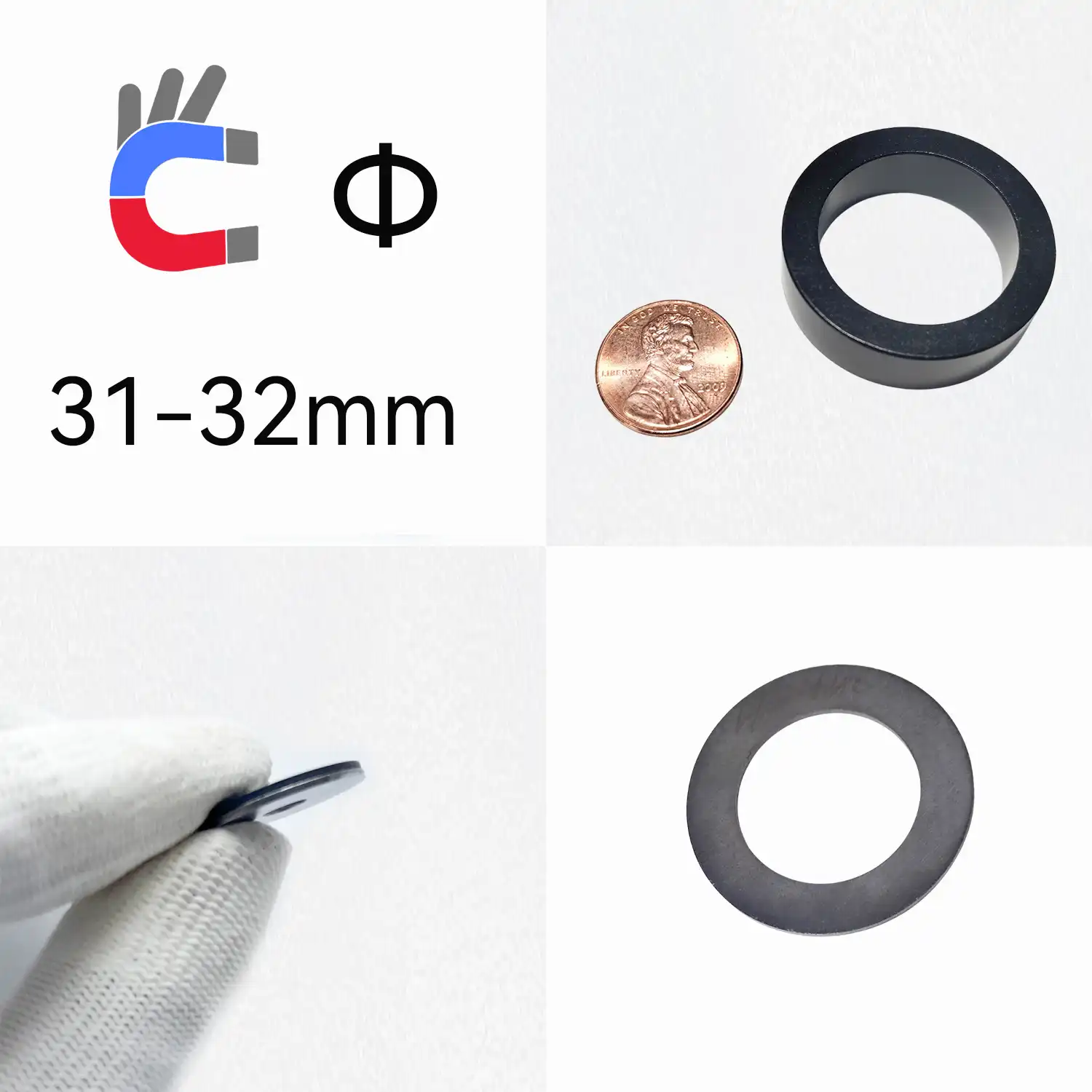
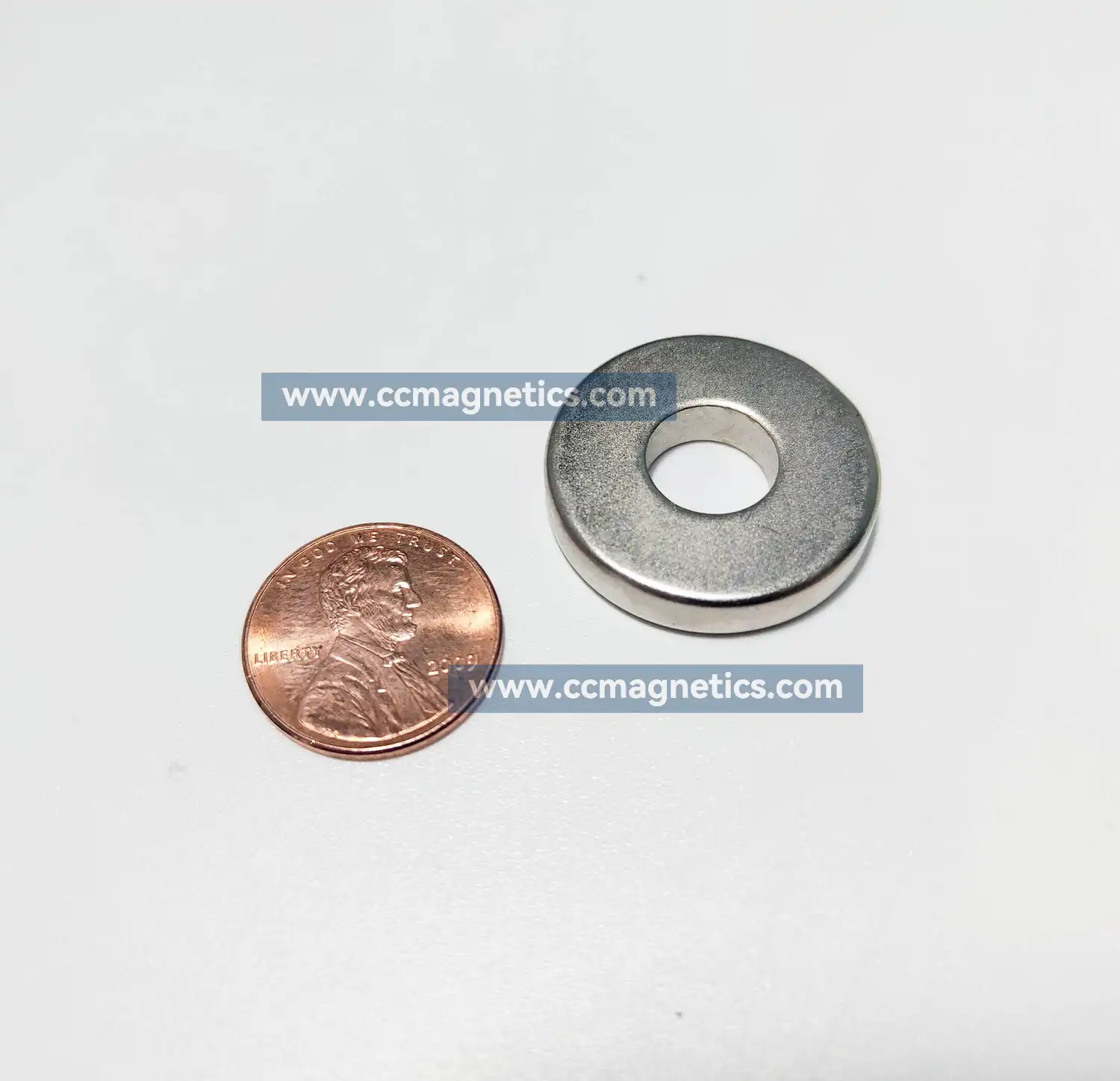
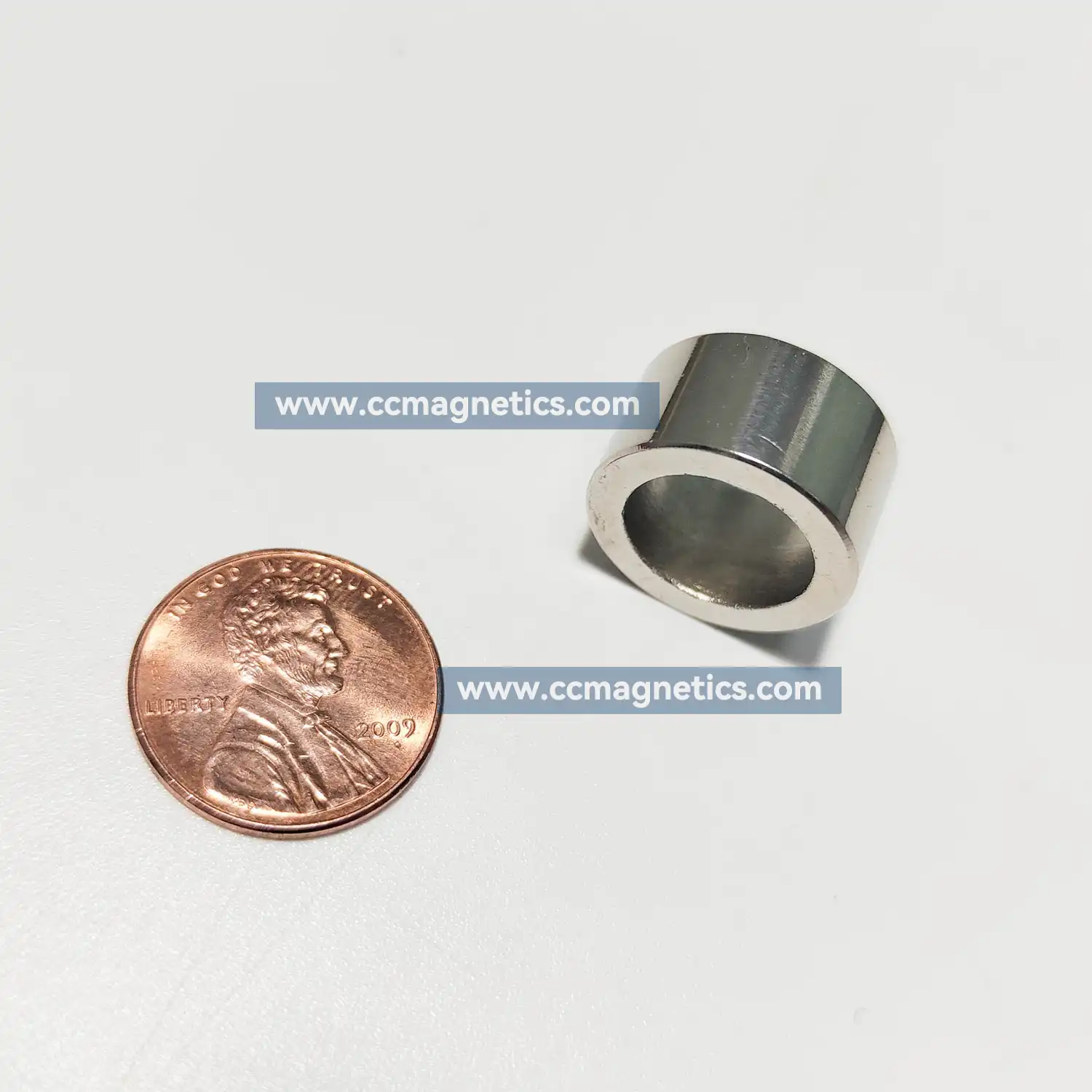
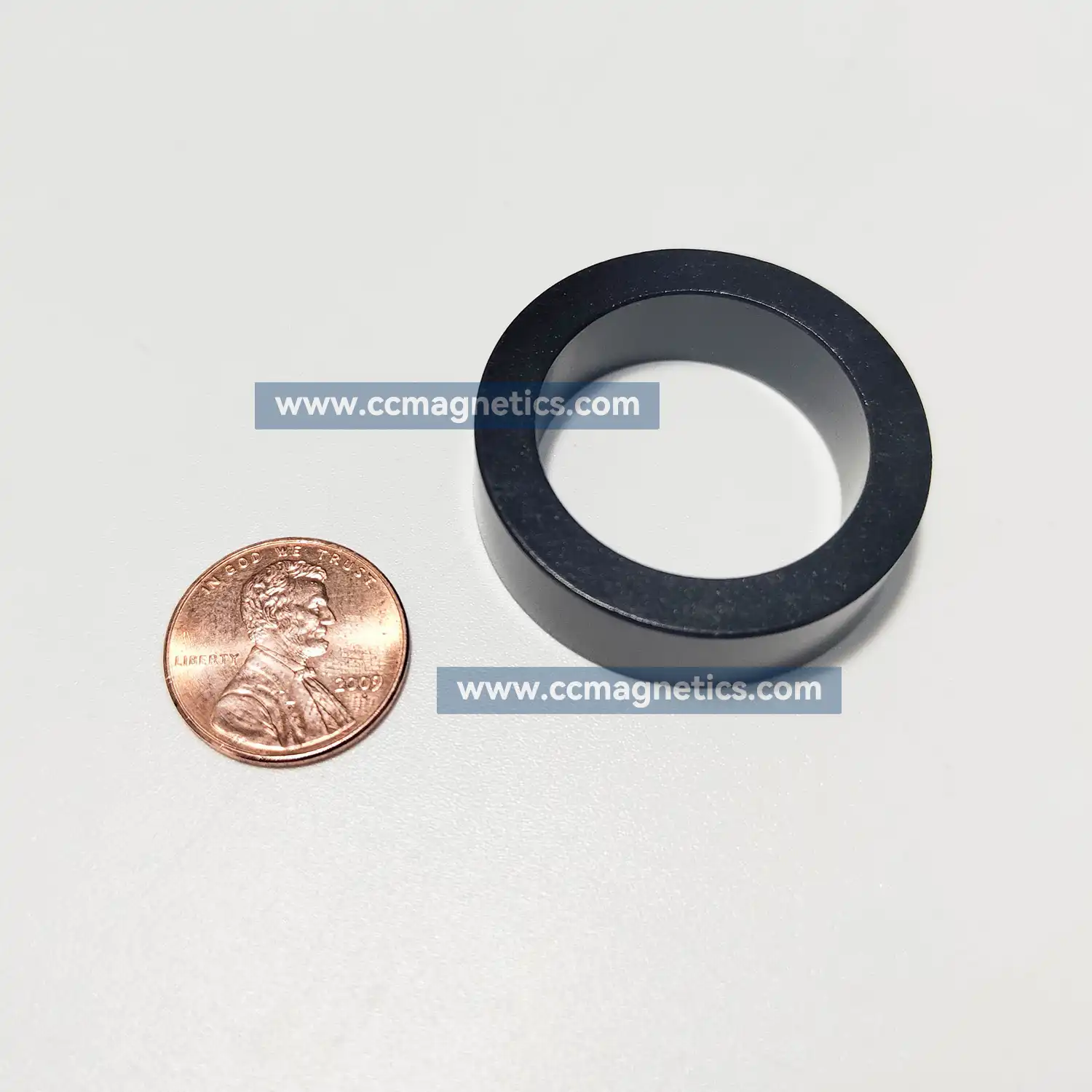
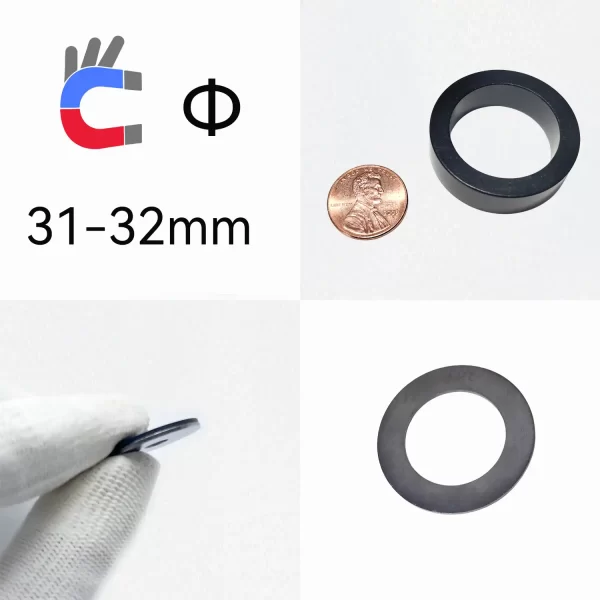
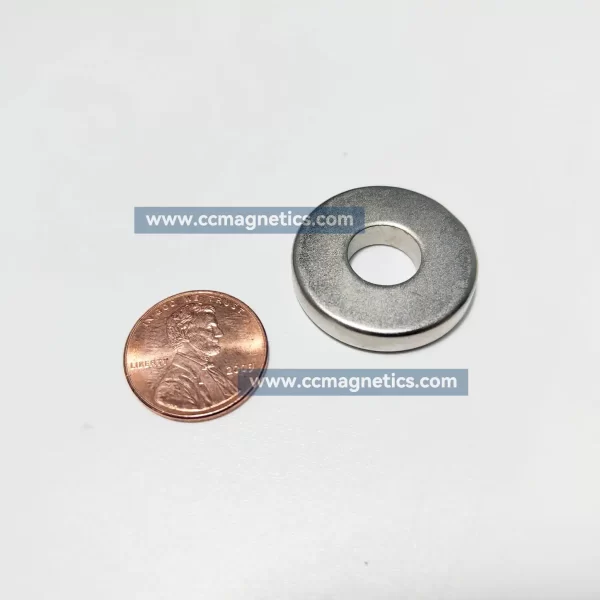
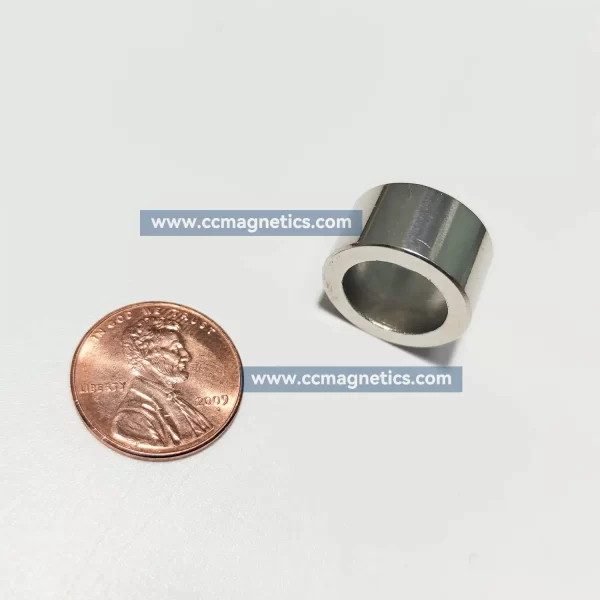
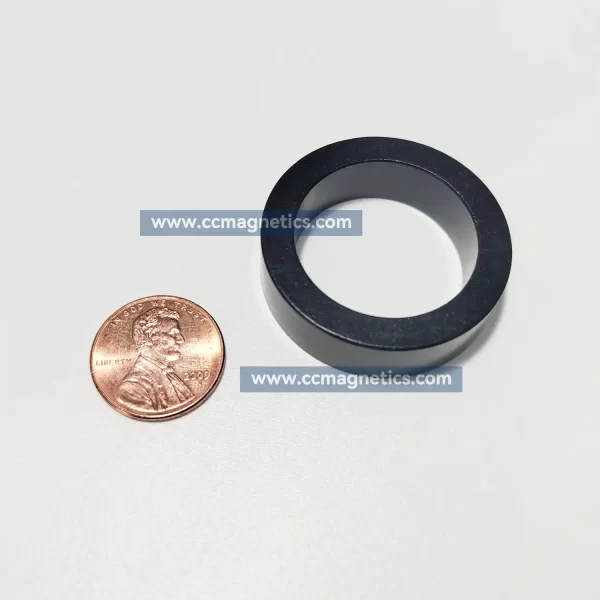
This listing offers 31-32mm OD NdFeB magnetic rings for incremental encoders, BLDC motors, and compressor rotors. Features include strict ±0.05mm OD/ID tolerances, 10-pole tilted magnetization, and 2.3mm through-holes. Select options are compatible with iC-MU150, IKS15.1, and AS5304A sensors, or include metal carriers. Grades range up to N45SH.
Note: Exact specs, compatibility, and magnetization state vary by specific PN. Verify details before purchase.
No unnecessary tooling fees
Global door-to-door delivery
Pre-delivery testing ensures accuracy

Bookmark this page for hassle-free R&D.
Understanding Our Parameter Table:
Magnetization method
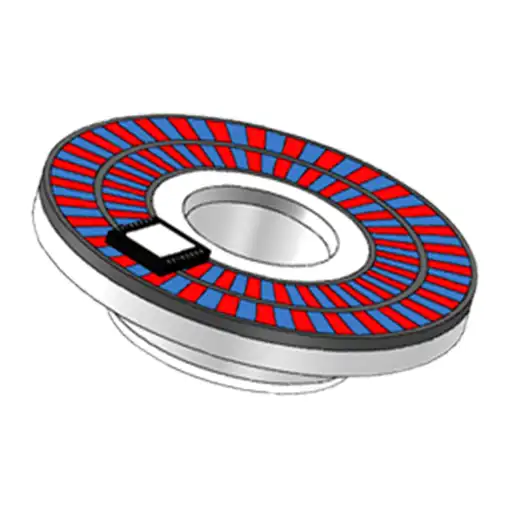
(Ex. MT/Pole Count = 8 poles)
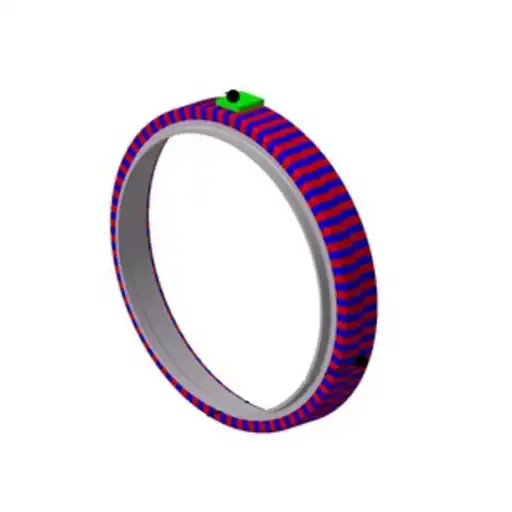
(Ex. MT/Pole Count = 2 poles)
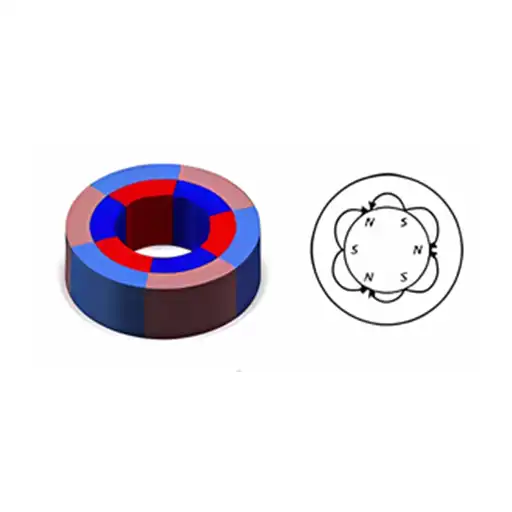
(Ex. MT/Pole Count = 6 poles)
Parameter Table Terminology:
| No. | Item | Description | Notes |
|---|---|---|---|
| 1 | PN | Part Number | Every magnet/magnetic ring has a unique PN. Duplicate values are sometimes caused by differences in raw material grades. |
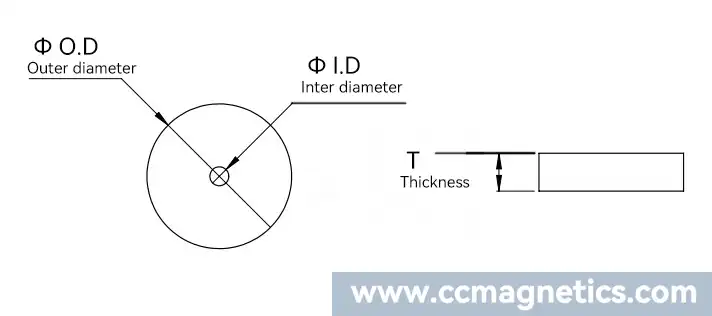
| 2, 3, 4 | O.D./I.D./T | The Magnetic Ring Dimensions | All dimensions in the table are in millimeters. O.D = Outer Diameter I.D = Inner Diameter T = Thickness |
| 5 | MT | Master-track Pole Count | For a magnetic ring with a single track, the Master-track represents the number of magnetic poles. For example, "10 poles" means 5 pole pairs. |
| 6 | NT | Nonius-track: Orbit with Fewer Pole Count | For a 2-track magnetic encoder ring, the Nonius-track typically has the lower pole count. The number of poles on the Nonius-track may sometimes be an odd number, such as 3 poles. |
| 5 | MATL | Magnetic Ring Material | There are various types of magnetic ring materials. Please refer to the FAQ at the bottom of the page. |
| 6 | SF | Surface Magnetic Field | This refers to the surface magnetic field strength. |
| 7 | MAG | Magnetization Method | Common magnetization methods are listed at the top of the page. |
| 8 | CMTS | Comments | This section provides information about the use, features, and other details of the magnetic ring. |
No matching products found.
FAQs
Please send the SKU number and quantity of the magnetic rings you want from the list.
Your salesperson will send you a price quote and payment options (T/T 100% upfront or credit card 100% upfront).
- In-stock items: Ship immediately after payment.
- Out-of-stock items: Ship within 30 days after payment.
Our magnetic rings have a key benefit: transparent costs for molds and magnetizing coils. We don't charge extra for these.
For small sample orders (around 10 pieces), this stock is usually leftover from larger production runs. Please pay quickly to secure your stock. We don't start production for small orders; it's not cost-effective for us.
We usually start production for orders over 2k-10k pieces to manage costs. If your order is small and not confirmed quickly, you might miss out on current stock.
Sizes: All lengths are in millimeters (mm) by default.
Number of poles:
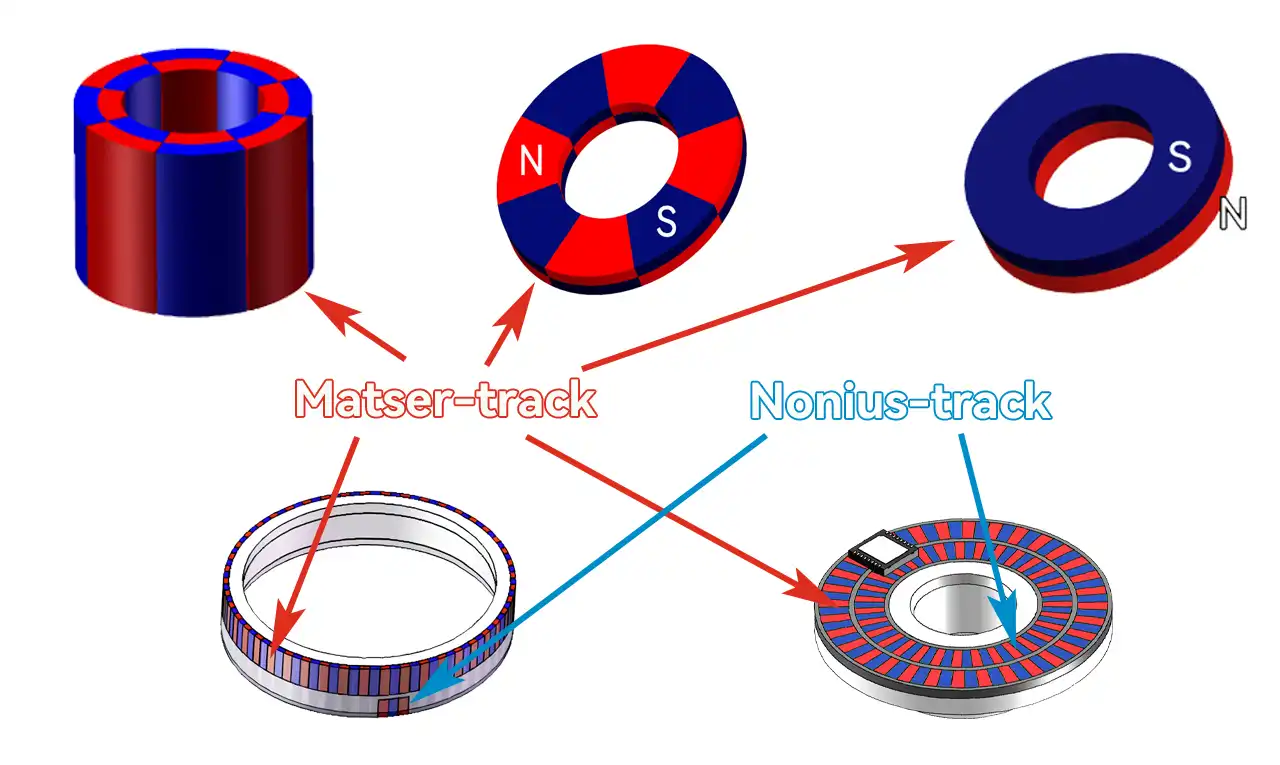
- The Master-track refers to the main magnetic track's pole count on a ring magnet. Most ring magnets, like those for motors or incremental encoders, have only one magnetic track.
- However, absolute encoder ring magnets or encoder ring magnets with marker points also have a Nonius-track. This means they have two magnetic tracks, as shown in the picture.
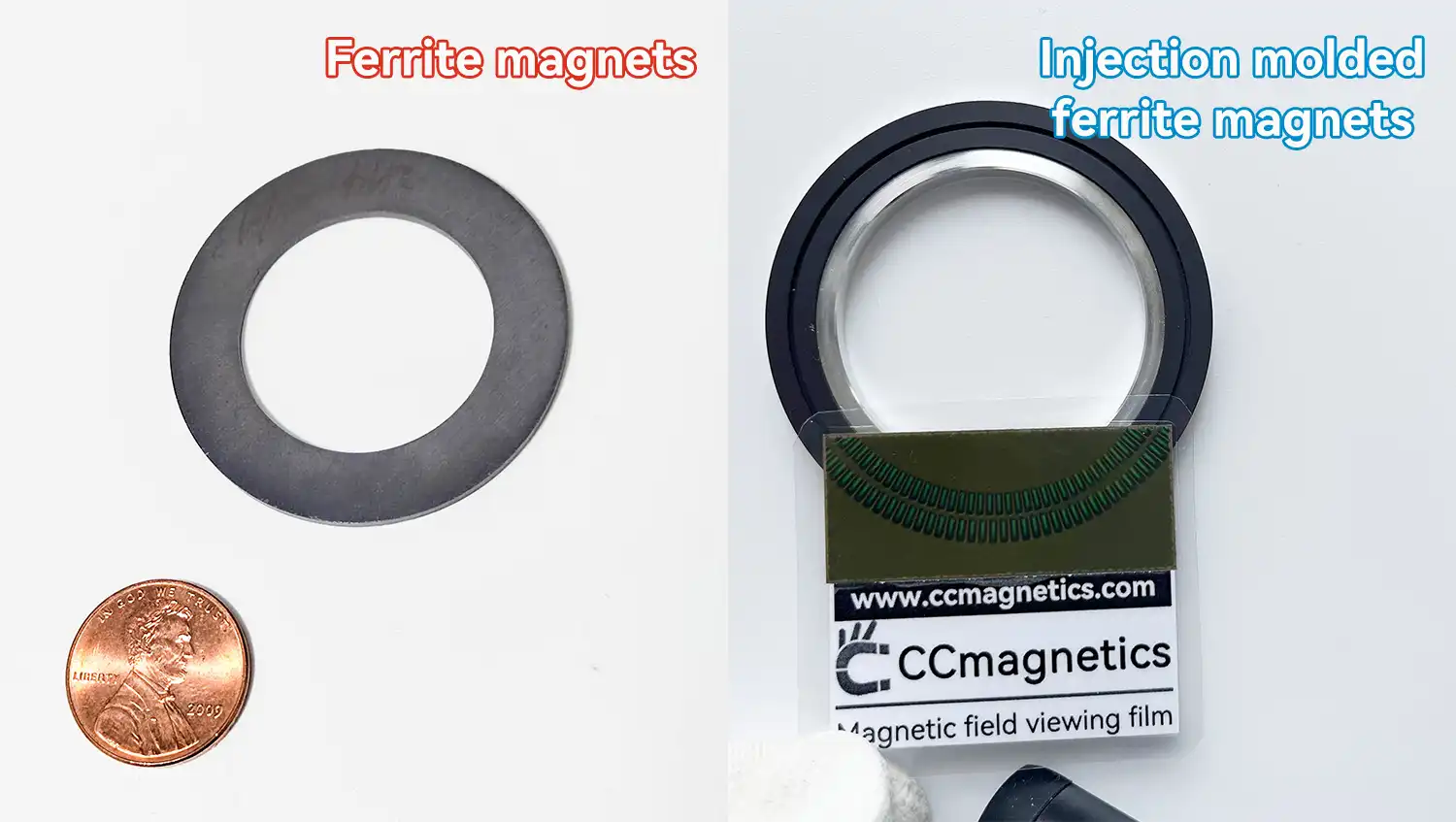
- Ferrite magnets are also called sintered ferrite or hard ferrite magnets. They look and are made like ceramics, so some call them ceramic magnets.These magnets are cheap to make in large amounts, even though the mold costs are high. They are very good at resisting rust and high temperatures, up to 250℃.Ferrite magnets are accurate and low-cost for encoders. But, they can break easily if shaken a lot, like in outdoor robots. For those, Vulcanized rubber magnet material is more stable.
- Injection molded ferrite magnets are made by mixing ferrite magnetic powder with plastic binders like Nylon (PA6 or 12) or PPS. This mixture is then injection molded, meaning it's shaped using a mold.These magnets can even be molded directly onto a metal shaft. They can work in temperatures up to 150°C.
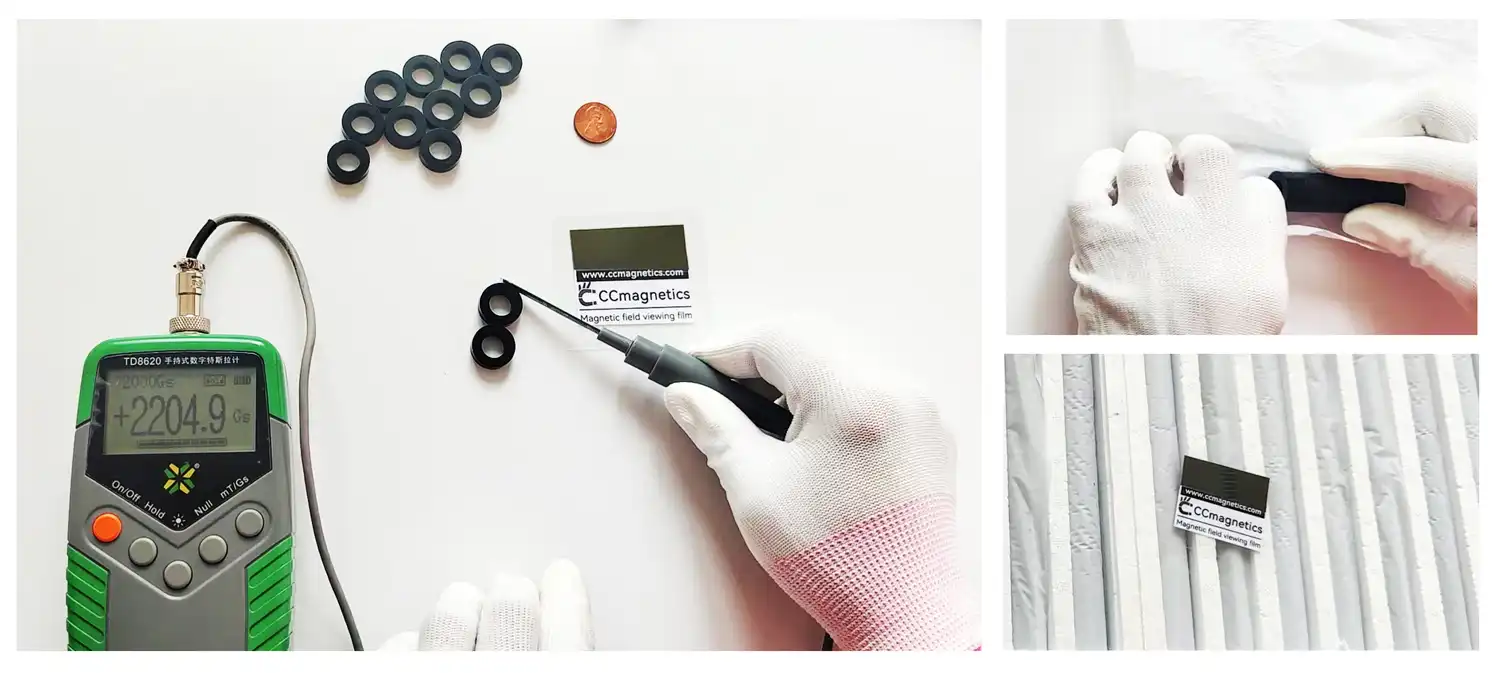
Bonded neodymium magnets are made by mixing neodymium magnetic powder with a binder.
Simply put, they are injection molded, which means they contain a binder. About 80% of the magnet is neodymium powder, and the remaining 20% is binder.
Their benefits include high dimensional accuracy, great design flexibility, and good mechanical strength.
Injection molded neodymium magnets are made by mixing neodymium magnetic powder with thermoplastic. This mix is then injection molded. These magnets are stronger than injection molded ferrite magnets.
Injection molded neodymium magnets can be made into many shapes. They can be small or irregular. You can magnetize them with multiple poles or complex patterns. They are also very accurate and consistent in shape.
These magnets can be molded directly onto motor cores or metal shafts. This saves assembly costs. They are seen as a stronger option than injection molded ferrite magnets. They can work in temperatures up to 180℃.
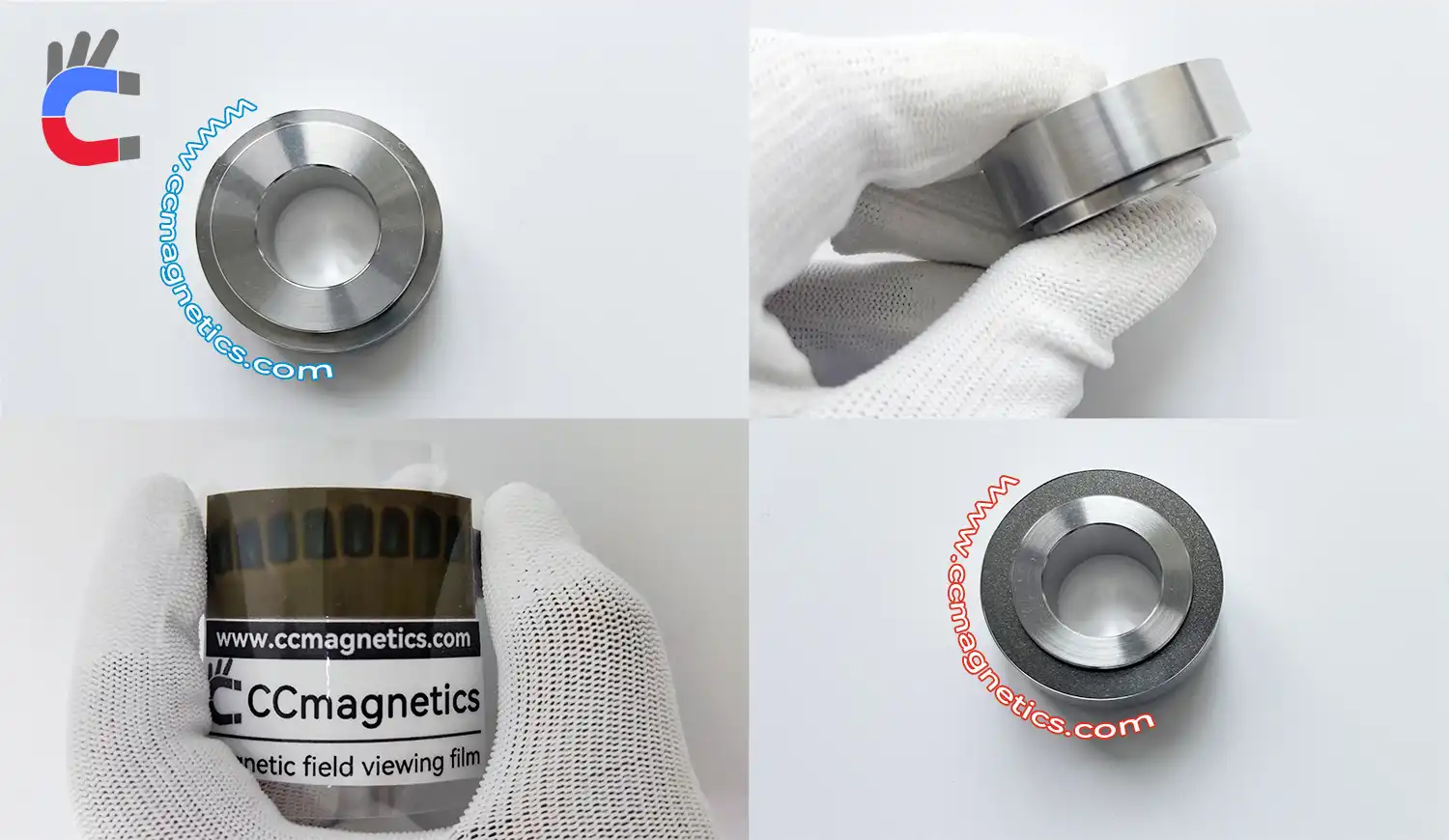 These magnets are injection molded neodymium or ferrite magnets that include a metal carrier. Please see the picture below:
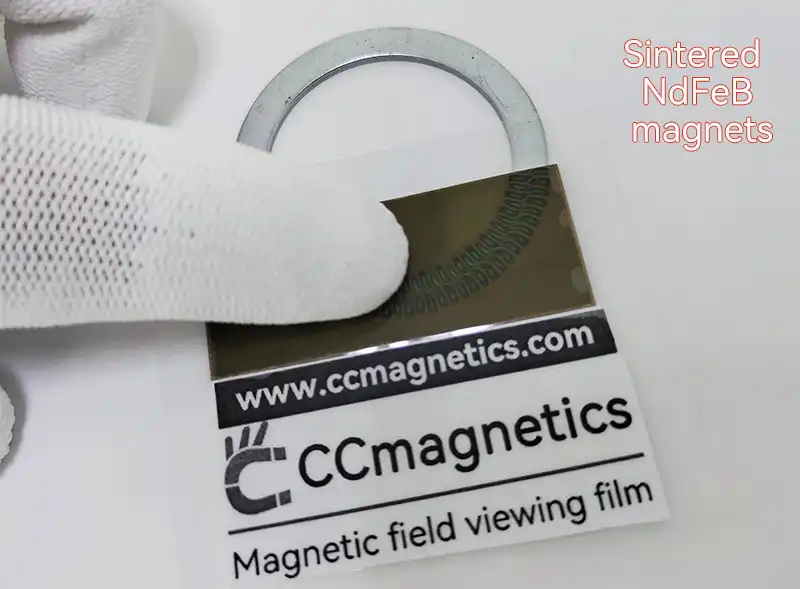
Sintered NdFeB magnets are also called Sintered Neodymium magnets. These are the strongest known permanent magnets. They are made from neodymium (Nd), iron (Fe), boron (B), and other rare earth elements.
These magnets create very strong magnetic fields and stay magnetic at room temperature. They can be made into many shapes. This makes them great for many uses, especially for high-end commercial motors.
Sintering is how they are made. Powdered materials are heated until they merge. This process makes the magnets stronger and more effective.
However, these magnets can corrode easily and are affected by high temperatures. So, they are usually coated (often with a nickel-copper-nickel layer) to protect them. Adding heavy rare earth elements also helps them resist higher temperatures.
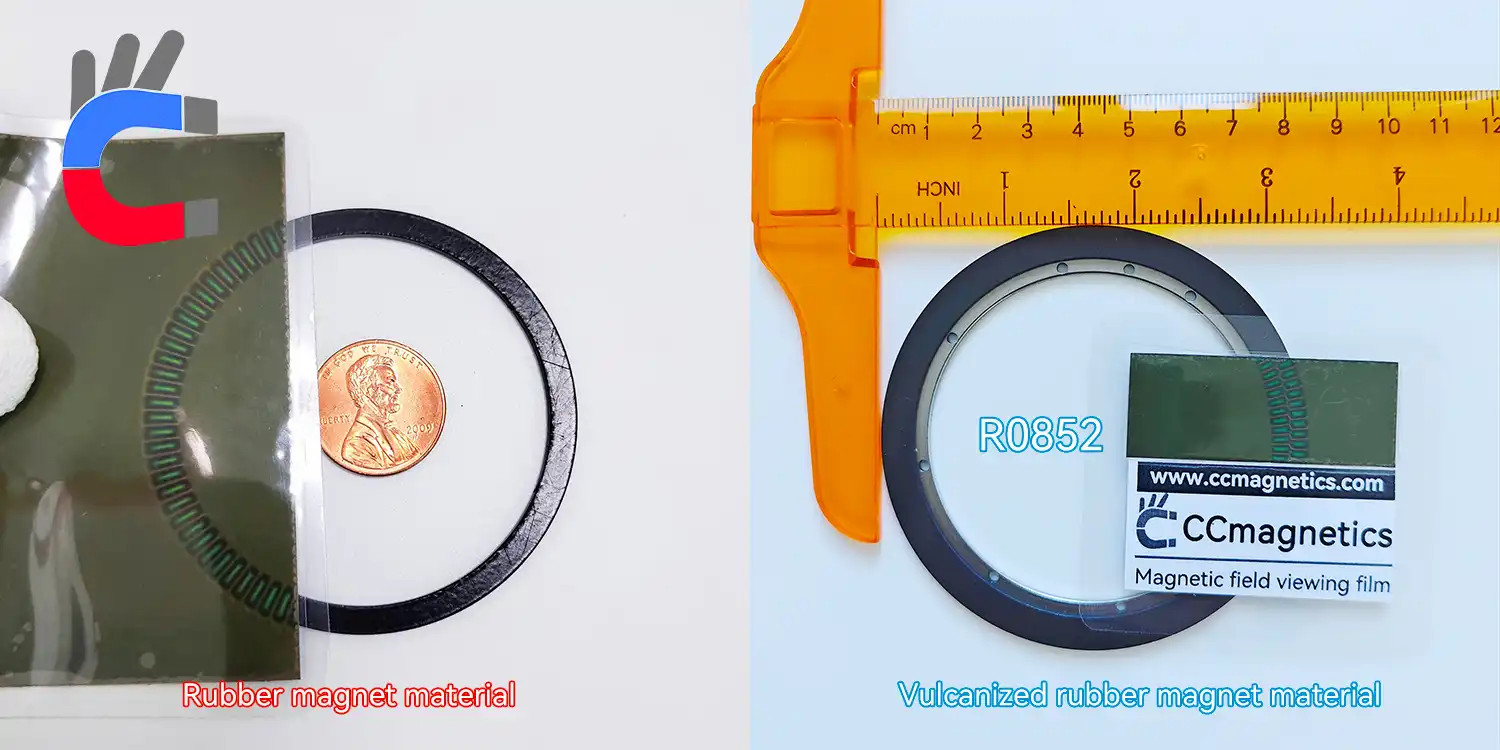
- Vulcanized rubber magnet material is made when magnetic powder is added to rubber during a process called vulcanization. This process changes the rubber's structure, making it much stronger, more elastic, and more stable.Vulcanized rubber magnets are often used for magnetic targets on sports robots. They are flexible and don't break easily from shocks.
- Rubber magnets are made from magnetic powder mixed with synthetic rubber. They are formed by extrusion, calendering, or injection molding. You can make them into strips, rolls, sheets, blocks, rings, and many other shapes. Their main advantages are that they are flexible and can be made into various shapes.However, their disadvantage is that they are not very strong (they don't have high remanence) compared to Neodymium magnets. For encoders, regular rubber magnets can't meet high precision needs. They are only good for single-track incremental encoders.
ginsberg.nicole –
I recommend using Lin Fang and her team. they do great work and meets the needs of her clients.
jeffrey.dinallo29 –
excellent quality! strong magnets
gymratcgl –
thank you a lot.