Deutsch
 Русский
 Español
 Français
 한국어
한국어 日本語
日本語
Understanding how to judge the quality and efficiency of magnetic disc couplings is essential for ensuring reliable power transmission in industrial applications. This guide breaks down the core metrics and technical advantages that define high-performance couplings.
I. The Fundamental Definition of Torque
Torque is the most critical metric for evaluating any coupling. It represents the maximum rotational force the unit can handle, directly dictating its load-carrying capacity. Physically, torque is the product of force and the lever arm. In practice, when force is applied to the end of a lever arm on a rotating part, the resulting twisting effect is the torque. This is the primary quantitative value used to measure how much power a coupling can transmit.
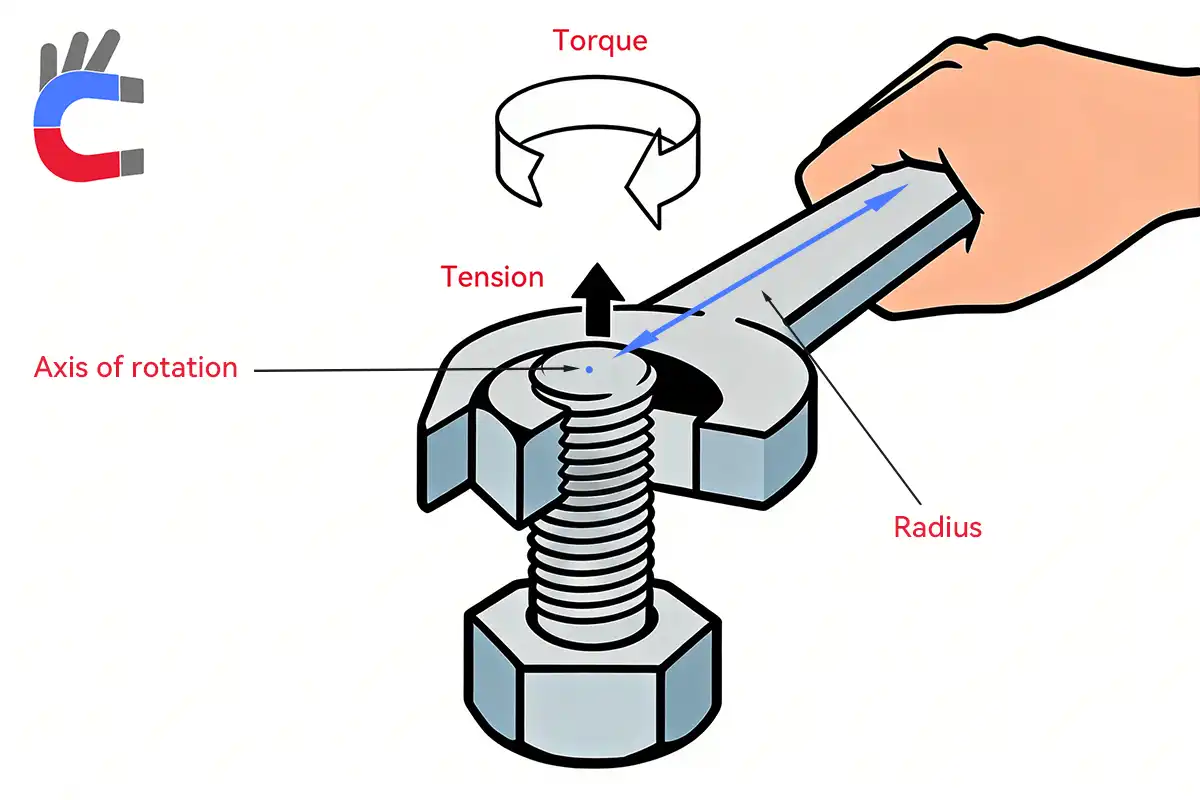
II. Unique Torque Characteristics of Magnetic Disc Couplings
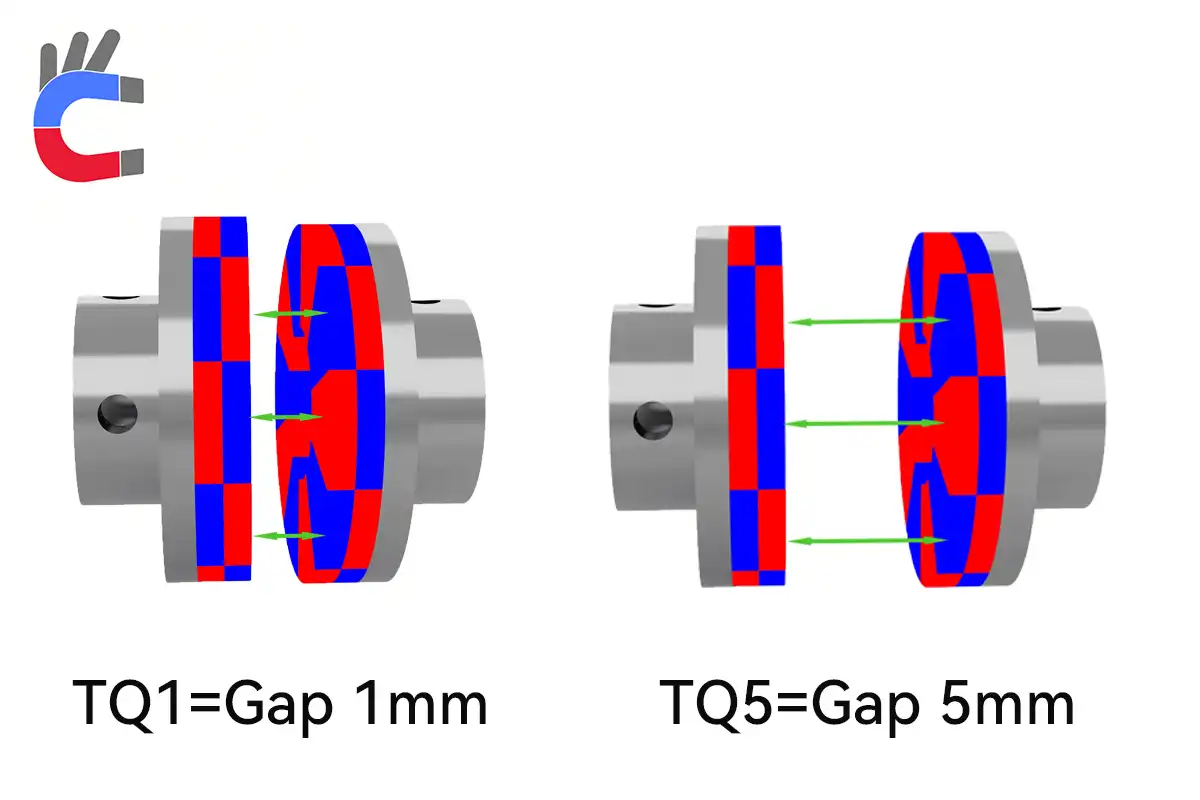
Unlike mechanical couplings, magnetic disc couplings use magnetic attraction for non-contact power transmission. This introduces specific physical behaviors:
- The Gap-Torque Correlation: The air gap between the left and right hubs determines the strength of the magnetic pull. A smaller gap results in higher magnetic flux density and higher torque capacity. As the gap increases, the flux density drops, and the torque capacity decreases accordingly.
- Quantifying Operating Conditions: To help engineers select the right part, CCmagnetics uses standardized indicators like TQ1 and TQ5. These represent the rated torque at a 1mm gap and a 5mm gap, respectively. This data provides a clear baseline for performance under different installation environments.

III. Standardized Torque Testing Procedures
The logic for testing magnetic couplings is similar to testing bolts or threaded holes, but it requires strict control over the air gap. The standard process involves:
- Installation and Alignment: The hubs are fixed according to specific requirements, using precision tooling to set and measure the exact gap distance.
- Load Application: A torque testing machine applies rotational force to the hubs, recording how much torque is generated at specific gap settings.
- Data Recording: Testing continues until the rated torque is reached or the coupling slips. This data is used to create a torque-gap characteristic curve, providing a full picture of performance.

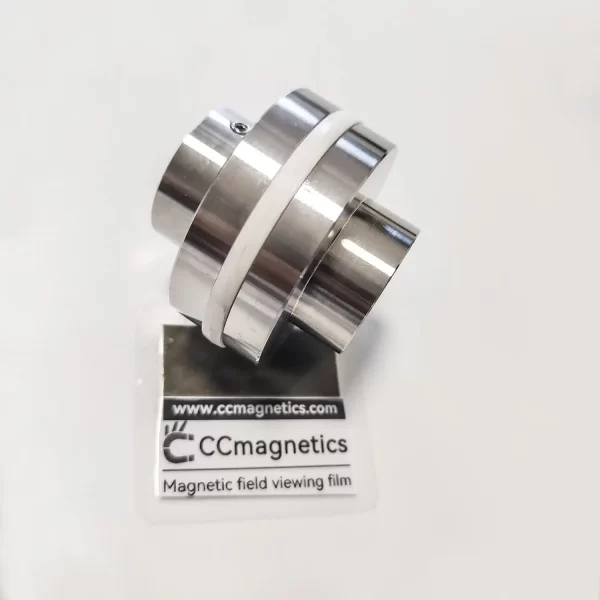
Magnetic Disc Couplings
IV. Technical Pathways to Superior Torque Performance
At CCmagnetics, we achieve industry-leading torque through innovative magnetic circuit design. Our technical advantages include:
- Sector-Shaped Magnet Optimization: We use sector-shaped (fan-shaped) Neodymium Iron Boron (NdFeB) magnets instead of traditional round magnets. This design maximizes the available surface area on the hubs, significantly increasing magnetic coverage.
- Enhanced Space Utilization: By optimizing the layout within the limited installation space, we achieve a higher magnetic flux density.
- Material and Structural Synergy: By combining high-grade NdFeB materials with our sector-shape layout, our couplings offer transmission efficiency that exceeds many standard European and American products. In the same installation footprint, our design can increase torque capacity by over 30%.